Wet Leaves Will Eat Your Clear Coat Long Before Winter Ever Gets a Shot at It
A single maple leaf on your hood looks like a stock photo. Give it a rainy Tuesday and eleven hours of darkness, and it becomes a chemistry experiment your paint never agreed to.
Everybody around here knows what winter does. Salt, brine, that gray slush coating the bottom six inches of every vehicle from December through March. Fall gets treated like the opening act, the pleasant stretch between bug season and salt season where your car supposedly coasts.
It doesn't coast. By the time the first plow rolls out, your clear coat has already absorbed weeks of damage from something considerably prettier than road salt.
Wet leaves, pressed flat against your paint while you sleep.
What Is Actually Inside a Leaf
Tannins, mostly. The same compounds that make black tea bitter & turn a white mug brown after you abandon it on your desk for a week. Leaves also carry natural pigments, a waxy surface coating, traces of sap & an acid load that climbs as the leaf breaks down.
A dry leaf on a dry car does nothing at all. It skitters off around 35 mph and you never think about it again. Water changes the whole personality of the thing. The leaf softens, flattens & bonds to your clear coat with all the enthusiasm of a tea bag abandoned in a kitchen sink.
What you end up with is a leaf-shaped ghost. A duller patch in the exact outline of whatever was there. On dark paint it reads like a watermark someone left on your trunk lid. On silver it hides for a few weeks, then appears as a hazy blotch the moment afternoon sun hits at the wrong angle.
Morning Dew Does the Dirty Work While You Sleep
Most leaf damage happens between 2 a.m. and 7 a.m. Cool nights, warm afternoons, and condensation forms across every horizontal surface of your vehicle. That moisture soaks the leaf, wakes up the tannins & holds the whole soggy mess against your finish for six or seven hours straight.
Now repeat that through October and half of November. A leaf that lands on a Sunday and stays put until Saturday has racked up five overnight cycles. Etching can begin inside 24 to 48 hours when conditions cooperate, and fall conditions cooperate almost every single night.
That beautiful shaded parking spot under the big oak? It turns your car into a collection plate. Sorry.
The Damage You Cannot See Is in the Drains
Paint staining is the visible half of the problem. The expensive half hides where your windshield meets the hood, in the cowl. Leaves pile up in there, break down into a wet mulch & block the drain channels that route rainwater away from your cabin and engine bay.
Clogged cowl drains cause soaked carpets, a musty smell you cannot locate, windows that fog and never fully clear & electrical faults in whatever control module lives under the passenger footwell. Sunroof drains pull the same stunt. So do the seams around your trunk lid.
None of this bothers you in October. You find out in February, when your floor mat squishes.
Sealing Your Paint in Fall Buys You the Whole Winter
Most drivers run this calendar backward. They seal in spring, right after the salt disappears, then let that protection wear thin across a long summer. October arrives, the paint is bare & the leaves start falling on it. Flip the order. A sealed surface gives tannins, sap & acidic rain nothing to grab onto. Water beads and rolls instead of pooling underneath a leaf for five hours. Contaminants rinse away at your next visit rather than bonding to the clear coat.
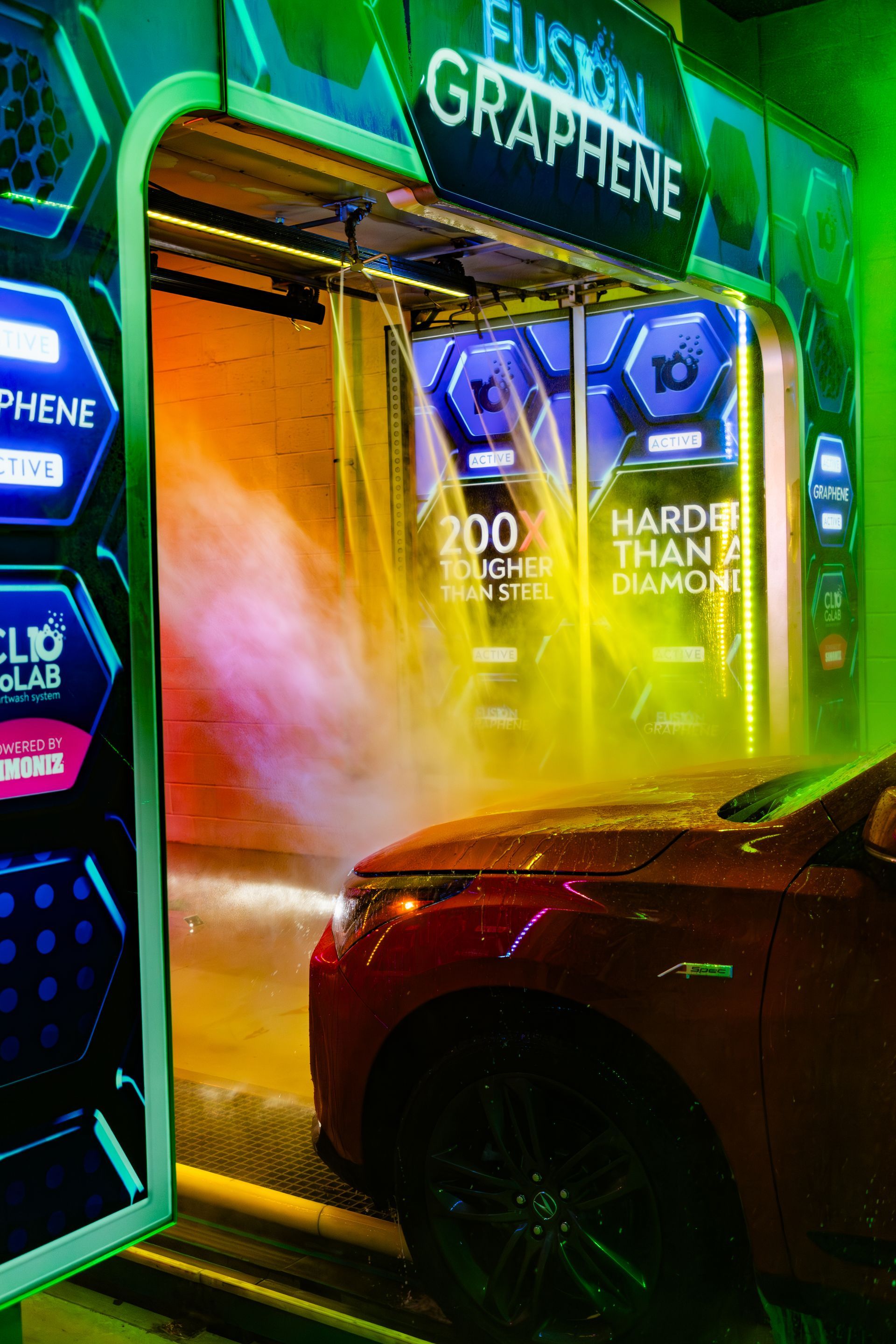
Our Fusion Ceramic smartwash lays down a protective layer that shrugs off UV, grime & corrosion. Fusion Graphene takes it further. Graphene and ceramic fused together, a shine as hard as a diamond and 200 times tougher than steel, flexible enough to move with your panels instead of cracking. Ceramic is very good. Graphene is better, and the difference is not marketing fluff. You will notice it the first morning a wet leaf slides off your hood instead of gluing itself there.
A smartwash cleans, seals, shines & protects. Four jobs, roughly three minutes, and you keep the rest of your Saturday.
Your Fall Paint Routine in Four Moves
Clear leaves before they get wet. Soft brush or a leaf blower. Never a dry rag. Grit plus pressure plus paint equals a body shop estimate.
Run a smartwash every 7 to 10 days through leaf drop. More often for anyone parked under trees, which around here is most of us.
Choose a wash that seals. Fusion Graphene or Fusion Ceramic. A rinse gets today's leaves off. A seal handles the next month of them.
Finish in the smartCARe Zone. Free vacuums, free towels, mat cleaners & rug beaters. Pull the mats and shake out the leaf confetti the kids tracked in.
Beat the Leaves and the Salt in One Move
Fall protection and winter protection are the same protection, applied early. Seal your paint in September or October and you're covered straight through the first snowplow, the first brine truck & the first wet Wednesday in April.
First-time customers can claim a free smartwash and try Fusion Graphene before spending a dollar. Pull in, sit back, watch three minutes of extremely satisfying foam, then drive out with a sealed finish that laughs at falling leaves. Your car spends the next several months looking like it made better decisions than everyone else's on the street. Which it did.
FAQ
How fast can wet leaves actually stain paint?
Etching can start within 24 to 48 hours, faster on a warm day after overnight dew. Dark paint shows it soonest.
Will a wash remove leaf stains that already set in?
Fresh marks come off with a proper wash and a sealing product. Deeper etching that reached the clear coat needs paint correction, so speed is your friend here.
How often should I wash during leaf season?
Every 7 to 10 days works for most drivers. Bump that up if you park outdoors under trees or leave your car at a commuter lot all day.
Is graphene really worth it over ceramic?
Yes. Ceramic gives you strong protection and great shine. Graphene adds hardness, flexibility & staying power on top of that, so it holds up longer against acidic residue and road salt both.
What about the leaves stuck in my windshield cowl?
A smartwash rinses much of that area out. Anything packed in tight is worth clearing by hand before it rots and blocks your drains.
Does an automatic wash handle the undercarriage too?
Ours does. Underbody rinsing clears out road grime and early salt, which is exactly where corrosion likes to begin.
Share this article